
What to Do After a House Fire in Alsip: First 48 Hours

Within the first 48 hours after a house fire in Alsip, prioritize life safety, secure official clearance from the Alsip Fire Department before re-entry, contact your insurer to start an ALE claim, and dispatch professional restoration at (407) 956-1738 for emergency board-up, winter freeze prevention, and soot stabilization.
First 48-Hour Fire Recovery Action Plan
- Wait for the Alsip Fire Department incident commander to issue official scene clearance before stepping inside.
- Contact your insurance agent immediately to report the loss and request an advance on Additional Living Expenses (Coverage D) for temporary housing.
- Do not restore power or gas utilities until inspected by ComEd, Nicor Gas, and a licensed Cook County electrician.
- Call Sears Park Smoke Damage Experts at (407) 956-1738 to perform emergency structural board-up, roof tarping, and plumbing freeze-proofing.
- Photograph and video all rooms, charred surfaces, water accumulation, and personal belongings before removing any item from the premises.
- Keep your furnace and HVAC systems shut off completely to prevent driving corrosive soot into unaffected living areas.
“In over fifteen years handling fire emergencies across Alsip, Oak Lawn, and Blue Island, our restorers have observed that the biggest post-fire loss multiplier isn't fire itself—it's delayed board-up and secondary water damage. In the Chicago climate, leaving a fire-damaged home open to precipitation or freezing temperatures overnight can burst pipes and double restoration costs. Immediate stabilization protects your claim and your home's structural integrity.”

Immediate Safety & Alsip Fire Department Scene Release (Hours 0–4)
The moments immediately following the extinguishment of a residential fire are chaotic, disorienting, and hazardous. Your absolute priority during the initial four hours is securing human life and pet safety. Under no circumstances should you attempt to re-enter a fire-damaged structure until the incident commander from the Alsip Fire Department (operating from Station 1 at 12600 S Pulaski Rd or Station 2 at 11946 S Kostner Ave) has conducted a complete post-suppression overhaul and officially released the property.
Even when visible flames have been extinguished, severe hidden hazards persist inside the home. Structural wood framing, subflooring, and ceiling joists may have experienced deep charring that strips away load-bearing capacity, creating catastrophic collapse hazards underfoot. Furthermore, smoldering insulation in wall cavities can produce lethal atmospheric concentrations of carbon monoxide (CO), hydrogen cyanide (HCN) from combusted synthetic foams, and acrolein.
Utility management during this initial phase is equally critical. The fire department or municipal utility responders will typically shut off electrical power at the exterior meter and disconnect natural gas supplies via Nicor Gas to eliminate explosion hazards. Never attempt to reactivate electrical circuit breakers or turn gas valves back on yourself. Electrical lines compromised by intense heat can arc behind drywall, sparking secondary electrical fires hours after responders leave the scene. If municipal inspectors or firefighters declare the structure unsafe for occupancy, respect the red-tag notice completely and prepare for temporary off-site accommodation.
Securing the Property: Emergency Board-Up & Winter Weatherproofing (Hours 4–12)
Once fire officials authorize emergency mitigation, your legal obligation under Illinois insurance law begins. Every standard homeowners policy includes a strict "duty to mitigate," requiring property owners to take all reasonable actions to protect the premises from secondary destruction, vandalism, and weather intrusion. Unsecured windows broken during ventilation, doors kicked open during forcible entry, and holes cut in roofs for thermal drafting expose your interior to rapid decay.
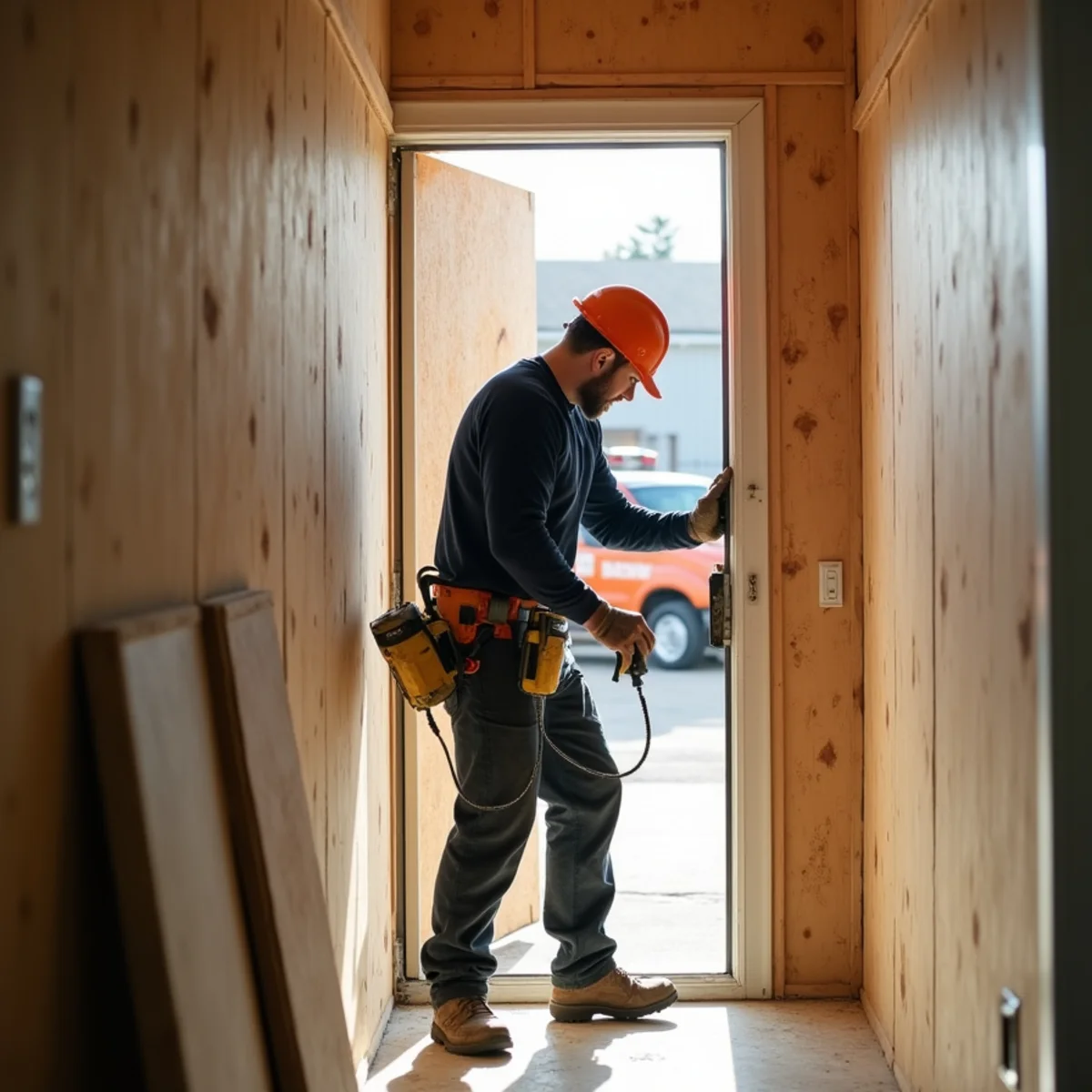
Dispatching our 24/7 crew for [emergency board-up and tarping services](/board-up-and-tarping-services/) within hours of scene release is essential. Technicians install heavy-duty exterior-grade 1/2-inch CDX plywood over all openings using non-destructive structural framing techniques that prevent structural damage to remaining door and window frames. Roof penetrations are sealed using reinforced 20-mil UV-resistant polyethylene tarps fastened with wooden battens, preventing Cook County rainfall and heavy snow from cascading into upper-level ceilings.
In northeastern Illinois, winter weather presents an immediate crisis. Sub-zero Chicago winter temperatures can penetrate an unheated, ventilated structure within hours. Water deployed by fire hoses pools in basements and saturates drywall, while stagnant water inside copper supply lines, hydronic heating loops, and toilet traps will rapidly freeze, expand, and rupture. Sears Park Smoke Damage Experts provides rapid winterization: shutting down the main water supply, blowing compressed air through all domestic plumbing lines, adding non-toxic propylene glycol antifreeze to traps, and deploying temporary commercial heating units to prevent devastating plumbing failures.
Opening the Insurance Claim & Navigating Illinois Loss Provisions (Hours 12–24)
Between hours 12 and 24, you must officially notify your insurance carrier's emergency claims division. Whether your policy is underwritten by State Farm, Allstate, Travelers, or a regional Illinois mutual carrier, promptly establishing your claim number and assigned field adjuster sets the foundation for your economic recovery. When contacting your adjuster, clarify the four primary coverage components of your homeowners policy:
1. **Coverage A (Dwelling):** Covers the physical structure, roof, subfloors, framing, and built-in mechanicals. 2. **Coverage B (Other Structures):** Covers detached garages, perimeter fences, and secondary sheds. 3. **Coverage C (Personal Property):** Covers contents, furniture, clothing, electronics, and household goods. 4. **Coverage D (Loss of Use / Additional Living Expenses - ALE):** Covers the increased cost of temporary lodging, meals, pet boarding, and storage incurred while your primary residence is uninhabitable.
Request an immediate emergency advance payment under Coverage D. Displaced families facing immediate hotel expenses, clothing replacement, and restaurant meals should not be forced to bear substantial out-of-pocket credit debt. Inquire about direct billing arrangements where your carrier coordinates payments directly with certified remediation providers. Our office works closely with adjusters on [fire damage insurance claims](/fire-damage-insurance-claims/), providing standardized Xactimate line-item estimates, digital moisture tracking logs, and certified particulate inventories that eliminate claim disputes and expedite approvals.
Comprehensive Visual Documentation & Non-Disturbance Protocols (Hours 24–36)
Before any physical cleaning or removal of debris begins, exhaustive visual documentation must take place. In the emotional aftermath of a fire, many homeowners instinctively begin throwing out blackened mattresses, scorched clothes, and damaged electronics. Discarding damaged items before the insurance adjuster has inspected and inventoried them can lead to outright claim denials or severe depreciation penalties.
Conduct a systematic photo and video walkthrough of the entire property while accompanied by your restoration supervisor. Document wide-angle panoramic views of every room followed by close-up shots of high-value items, serial numbers on appliances, manufacturer labels on charred electronics, and structural soot patterns. Capture the waterlines left on drywall by firefighting operations, as well as the depth of ceiling sagging from water saturation.
Avoid the common soot migration trap during this documentation phase. Walking across soot-covered carpets transfers oily carbon compounds into unaffected bedrooms and hallways. Touching painted drywall with bare hands transfers skin oils that chemically react with acidic soot, etching permanent fingerprints into finishes. Keep traffic through the structure strictly limited to essential personnel wearing disposable Tyvek booties and nitrile gloves. Serving neighboring communities including [Oak Lawn](/service-areas/oak-lawn-il/), [Blue Island](/service-areas/blue-island-il/), and [Crestwood](/service-areas/crestwood-il/), our local crews implement containment barriers to safeguard pristine zones.
The First 48 Hours Restoration Checklist: What Professionals Handle (Hours 36–48)
By hours 36 to 48, professional mitigation must transition from emergency stabilization to active restoration. Fire suppression efforts often leave hundreds or thousands of gallons of water standing in crawlspaces, basements, and between ceiling joists. According to the IICRC S500 standard for professional water damage restoration, mold spores can germinate within 24 to 48 hours in damp indoor environments. Sears Park Smoke Damage Experts deploys commercial truck-mounted extraction units and weighted deep-extraction tools to remove standing water before secondary microbial amplification occurs.
Simultaneously, acidic soot residues must be stabilized. Synthetic plastics, polyvinyl chloride (PVC) plumbing, and polyurethane furniture foam release corrosive hydrochloric acid and sulfur dioxide when combusted. Within 48 hours, these acidic residues cause irreversible yellowing on fiberglass tub surrounds, pitting on chrome bathroom fixtures, and permanent staining on stone countertops. Technicians apply specialized alkaline pre-conditioning neutralizers and use dry chemical rubber soot sponges to lift particulate deposits without moisture.
Industrial negative-air machines equipped with multi-stage HEPA filtration and activated carbon banks run continuously to capture respirable PM2.5 particles and volatile organic compounds. By establishing negative pressure, our crews ensure that smoke contaminants are vented directly outside rather than circulating through unaffected living quarters. Engaging Sears Park Smoke Damage Experts for [emergency fire damage restoration](/emergency-fire-damage-restoration/) within the first 48 hours prevents structural decay, protects family health, and restores peace of mind.
Need Professional Fire Restoration in Alsip?
Our 24/7 emergency response crews mobilize immediately with HEPA scrubbers, thermal foggers, and direct insurance billing.